Bayt Al Sha'ar - House of Hair
Date:
2025
Materials:
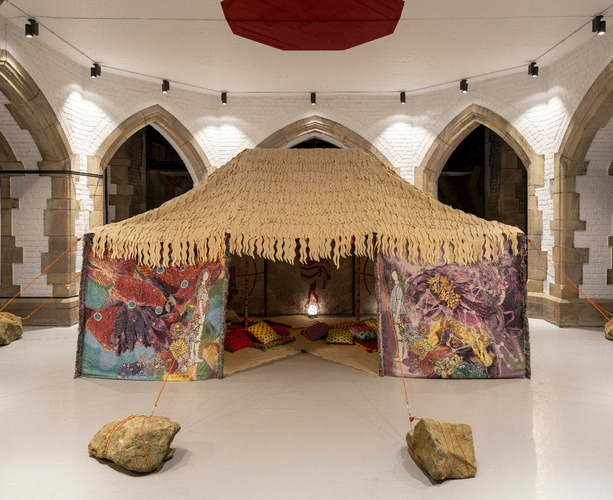
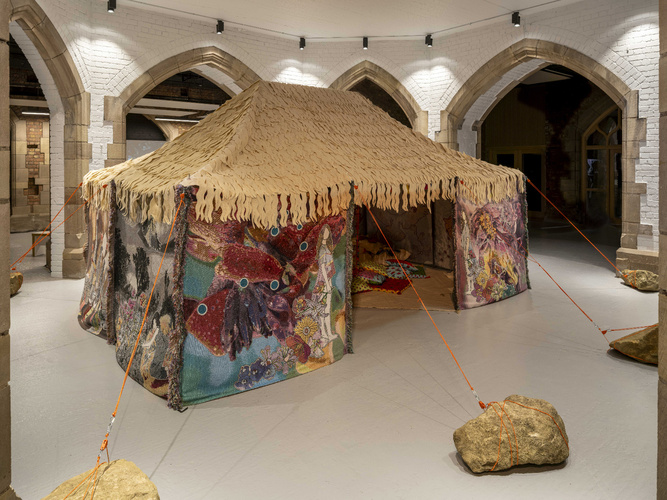
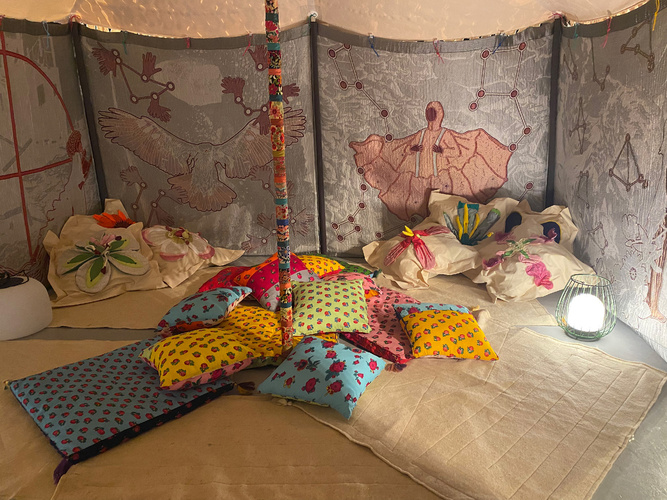
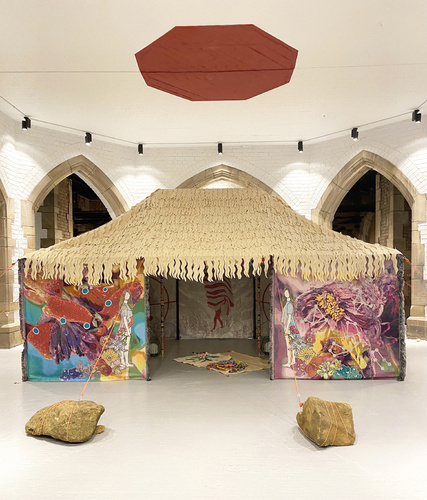
Nine tapestries in wool, Elirex silver thread and recycled PETT, aluminium structure, cotton canvas roof, raw wool fleece, cushions, ribbons, tassels, guy ropes, locally sourced stone anchors
Dimensions:
510 x 340 x 280h cm
Exhibition history:
2026 Bienal Burgos, Spain; 2025 British Textile Biennial, East Lancashire, UK
Courtesy:
Lucy + Jorge Orta. With the support of TextielLab Textile Museum, Tilburg
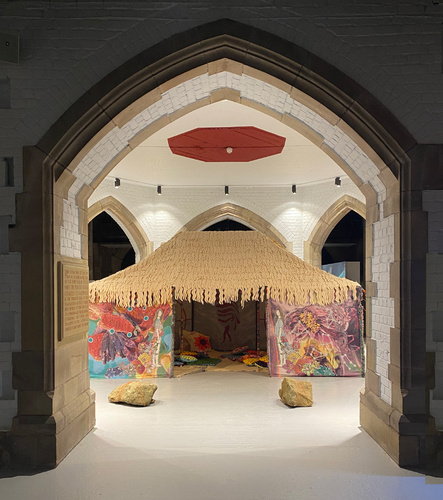
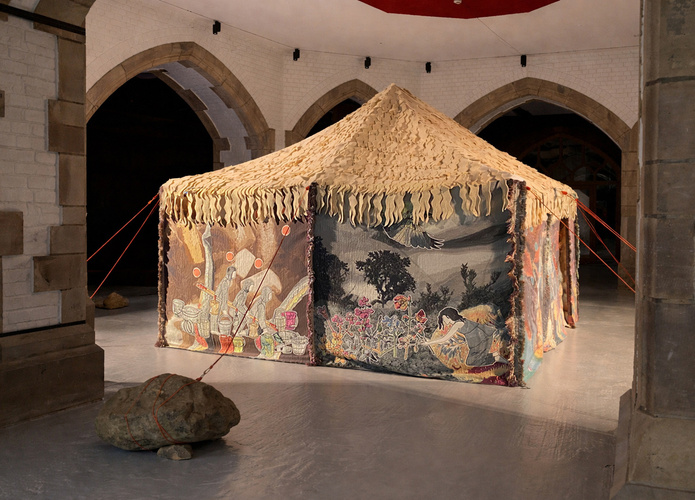
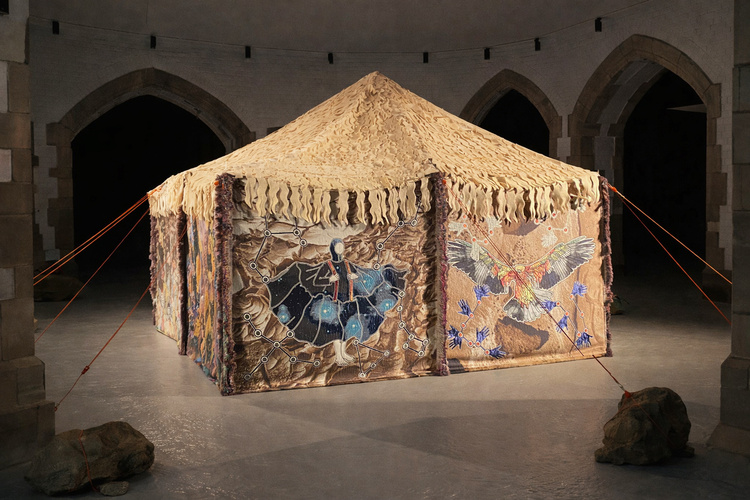
Inspired by traditional Bedouin dwelling practices Bayt Al Sha'ar - House of Hair is a tactile sculpture that reimagines the traditional Bedouin tent as a speculative response to nomadic living under conditions of mass desertification.
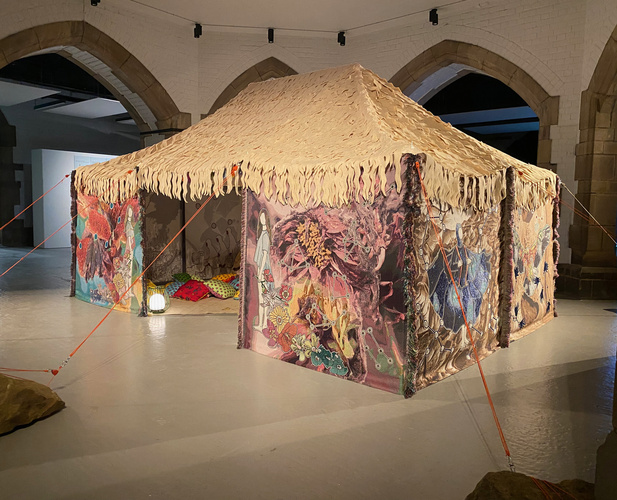
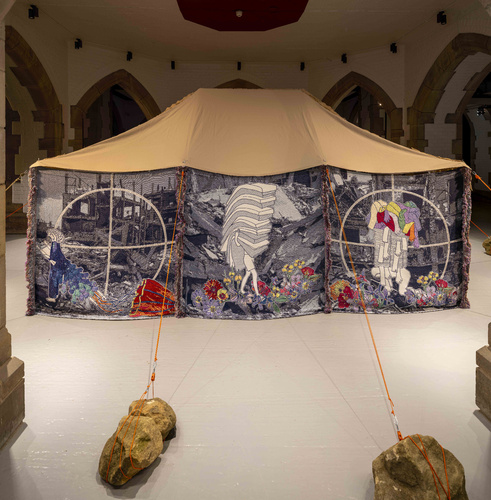
The sculpture comprises nine monumental tapestry panels from drawings and collages by Lucy Orta. The resulting iconography merges past, present and future, moving through jungles and desert landscapes profoundly altered by climate change—where resource scarcity gives rise to conflict, yet from whose ruins emerge alternative forms of life and new ways of living and being.
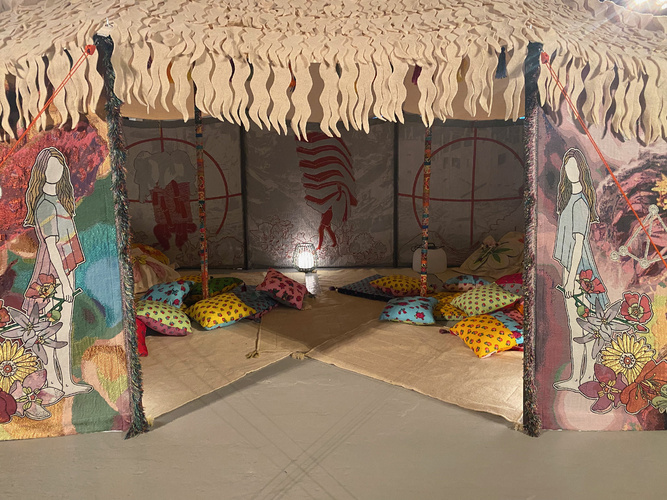
Lucy investigates how vernacular architecture and weaving traditions, particularly the Saudi Arabian practice of Al Sadu, can inform ways of living in harmony with extreme environments. Drawing on research into desert symbolism, the vibrant jacquard weaves combine photography from diverse ecosystems (including the Amazon and the Al’Ula desert) with mythical figures, desert plant species, and celestial motifs. At the entrance, the Earth goddess Gaia who welcomes visitors into the majlis gathering space. Surrounded by constellations and the Pleiades star cluster evoke ancient systems of celestial navigation. Moving around the tent subsequent tapestries depict desert dwellers —Imperial Eagle and Flying Man— who survive hostile conditions, while the Water Gatherer and Seedling Spirit nurture new forms of life. The cycle ultimately returns to Gaia, suggesting regeneration and the possibility of alternative futures.